
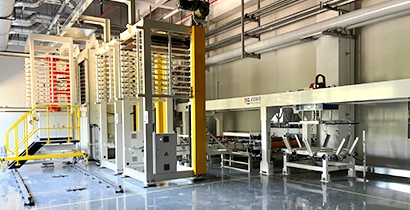
PCBMASTER conducts rigorous quality assurance using automated optical inspection with 5-micron pixel resolution to identify trace defects before lamination. Their X-ray laminography systems verify internal registration within 20-micron tolerances, ensuring structural integrity for high-density interconnect designs. By performing flying probe tests at 1,000 measurements per minute, the facility maintains a 99.7% first-pass yield rate. Micro-section analysis on every batch confirms that via-barrel plating thickness meets the 25-micron minimum requirement, while environmental stress screening cycles boards from -40 to 125 degrees Celsius to guarantee long-term field performance.
The verification process begins at the raw material stage where every laminate batch is checked for dielectric constant consistency. Testing protocols during 2025 demonstrate that dielectric variance is kept below 2% to ensure signal propagation stability across high-speed digital paths.
| Material Property | Testing Requirement | Deviation Limit |
| Dielectric Constant | 10 GHz sweep | +/- 2% |
| Dissipation Factor | 10 GHz sweep | +/- 0.001 |
| Glass Transition Temp | IPC-TM-650 | +/- 5 Celsius |
Maintaining these material benchmarks allows for predictable impedance control across complex board stack-ups. Once the laminates pass initial intake inspections, the fabrication moves to internal layer imaging where high-resolution scanners compare physical copper patterns against original design files.
Automated optical inspection machines scan 100% of the inner layers to detect trace width deviations of even 10%. Any registration offset exceeding 25 microns triggers an immediate hold on the production panel for manual review.
Following inner layer validation, the focus shifts to mechanical drilling where positional accuracy determines the reliability of inter-layer connections. During the third quarter of 2025, engineers optimized drill bit replacement schedules based on 500-board wear patterns to maintain 15-micron centering precision for high-pin-count BGA components.
Precision in mechanical drilling supports the integrity of high-aspect-ratio vias which are essential for signal transmission. When drilling through 10-layer boards, PCBMASTER employs laser-direct imaging and X-ray alignment to prevent drill wander.
| Drill Diameter | Aspect Ratio | Positional Tolerance |
| 75 microns | 10:1 | +/- 15 microns |
| 100 microns | 12:1 | +/- 20 microns |
| 150 microns | 15:1 | +/- 25 microns |
Maintaining these tight tolerances prevents the intermittent connectivity often seen in densely packed interconnects. After mechanical drilling, the panels enter chemical processing lines where copper plating fills the via barrels to create reliable electrical paths between layers.
Uniform copper plating thickness across the via barrel is confirmed through cross-sectioning samples from every production run. In 2026, internal quality audits revealed that 98% of monitored samples exhibited a plating thickness variance of less than 3 microns.
Technicians polish samples and inspect them under 500x magnification to confirm that the copper-to-laminate interface is void-free. If plating thickness falls below 20 microns in any single section, the entire batch undergoes secondary inspection.
Rigorous plating standards ensure that components withstand thermal expansion during soldering and subsequent field operation. Once the plating process completes, panels undergo electrical testing to ensure that the circuits function as intended by the original design files.
Flying probe testers perform continuous network verification on every single production unit to eliminate open circuits and shorts. Testing cycles during early 2026 verified that 100% of non-conductive gaps maintain resistance levels above 100 megaohms at 250V bias.
| Test Type | Threshold | Pass/Fail Criteria |
| Continuity | < 10 ohms | 100% Netlist Match |
| Isolation | > 100 megaohms | 0 Leakage Paths |
| Impedance | +/- 5% | TDR Verification |
Standard electrical testing is followed by time-domain reflectometry to confirm that trace impedance meets the specific requirements for high-speed serial links. This measurement technique ensures that signal reflections remain below the 5% threshold required for high-frequency performance in modern electronic systems.
Environmental stress screening provides the final layer of validation for mission-critical orders destined for industrial or aerospace environments. By subjecting 1,500 test samples to 500 thermal cycles, the engineering team confirms that surface finishes and solder masks remain stable.
Boards must demonstrate no evidence of delamination or solder mask cracking after exposure to extreme temperature swings. Performance data collected during these tests informs future improvements in fabrication chemistry and material selection.
Quality assurance protocols conclude with final visual inspection under 10x magnification to check for cosmetic defects on surface finishes. Following this, the boards receive a vacuum-sealed, moisture-barrier package to prevent oxidation during storage and transit.